Robotic Recycling? Tell me more!

Have you ever thought about the role of robotics, automation and AI in our mission towards a more circular society?
To learn more, we had a chat with Mahmoud Akkawi, Teacher & Engineer, member of the ReDo community.
Mahmoud's current PhD research focuses on developing faster and more intelligent robotic disassembly systems for waste electrical and electronic equipment. This includes AI-based product and component recognition, robotic grasping and manipulation, disassembly planning, and exploring how product design can be improved to support automation, repair, reuse and recycling.
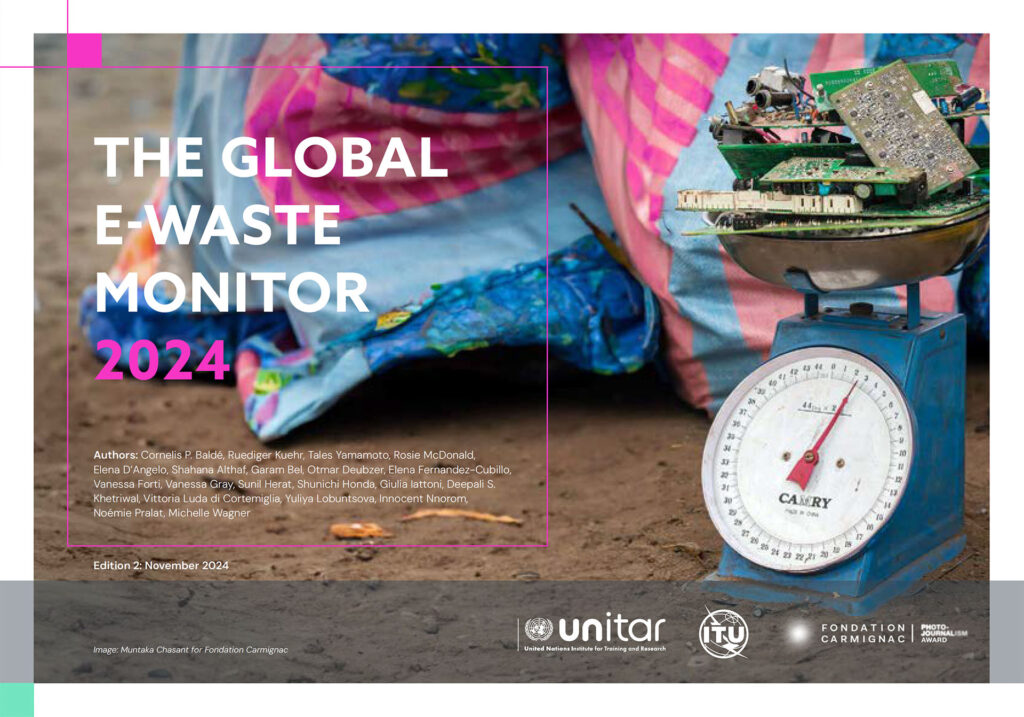
This area of work is of paramount importance, given e-waste is one of the world’s fastest-growing waste streams. In 2022 alone, 62 million tonnes were generated, yet less than a quarter was properly recycled (1).
So we asked Mahmoud a couple of questions, as part of our 'Voices from the Field' blog series.
1. What is the most overlooked detail in making a product or system truly circular?
One of the most overlooked details is designing for the product’s end of life from the very beginning. Many products are designed mainly for manufacturing, appearance and performance, while very little consideration is given to how they will later be repaired, upgraded, disassembled or recycled. Small design decisions, such as the type of fasteners, accessibility of components and how materials are joined, can make the difference between a product that can be efficiently recovered and one that becomes waste.
2. What is one thing you wish more people understood about your field?
I wish more people understood that robotic disassembly is not simply the reverse of assembly. Products arrive in different conditions, with damage, deformation, missing parts, corrosion and variations between models. A robotic system must therefore be able to perceive, reason and adapt rather than follow one fixed sequence. This is why artificial intelligence, computer vision, robotics and product design all need to work together.
3. What is the most exciting “what if” question guiding your work right now?
The question guiding much of my work is: What if robots could understand an unfamiliar product, identify its components and materials, and independently determine the safest and most efficient way to disassemble it? Achieving this could make automated disassembly much more adaptable and economically viable, while supporting repair, remanufacturing, component reuse and higher-quality recycling.
At ReDo, we are proud to spotlight voices driving this transition forward. Conversations like this remind us that building a circular future depends not only on better technology, but also on the collaboration needed to turn ideas into practice. Feel free to check out our latest solutions directly on the ReDo Platform.
You can also find Mahmoud's latest publications here: https://researchke.kingston.ac.uk/ws/portalfiles/portal/50396059/Gaz-C-49730440-AAM.pdf
References
 ewastemonitor